
The Blog

The Blog

What is the Nicene Creed? Reflections on its 1700th Anniversary in 2025

What is the Nicene Creed? Reflections on its 1700th Anniversary in 2025

This year marks a remarkable milestone: 1700 years since bishops from across the Christian world gathered at Nicaea in AD 325. What they produced and what was later completed at the First Council of Constantinople in AD 381 has become the most widely embraced statement of Christian belief in history. Catholics, Orthodox, Baptists, Anglicans, Lutherans, Presbyterians and Methodists: all confess the same Trinitarian faith through the words of this ancient Creed.​

When Emperor Constantine summoned church leaders to Nicaea, the issue at stake was nothing less than the identity of Jesus Christ. Arius, an influential teacher from Alexandria, had begun preaching that the Son of God was created, the highest of all creatures, yes, but still a creature. ‘There was when he was not’, Arius declared, suggesting a time before the Son existed.​

For many bishops, this struck at the heart of the gospel itself. How could a created being save humanity? How could anyone less than fully God bridge the chasm between the divine and human? Scripture’s witness seemed clear: ‘In the beginning was the Word, and the Word was with God, and the Word was God’ (John 1:1). Paul had written that Christ is ‘the image of the invisible God’ through whom ‘all things were created’ (Col. 1:15-16).​

The Council’s response was unequivocal. They declared that the Son is homoousios, ‘of one substance’ with the Father. Not similar. Not almost the same, but identical in divine essence. The Creed captures this with majestic repetition: ‘God from God, Light from Light, true God from true God, begotten, not made’. I love that sentence!​

Critics sometimes suggest that the Creed relies on philosophical categories that are alien to the Bible. Yet every line reflects scriptural truth. The opening declaration of ‘one God, the Father Almighty, maker of heaven and earth’ echoes both Gen. 1:1 and Israel’s great confession in Deu. 6:4. The description of Christ as God’s ‘only begotten Son’ comes straight from John 3:16. Even the technical term homoousios, while not appearing in Scripture, expresses what Hebrews 1:3 means by calling Christ ‘the radiance of God’s glory and the exact representation of his being’.​

The First Council of Constantinople in AD 381 expansion gave fuller attention to the Holy Spirit, confessing Him as ‘the Lord, the giver of life, who proceeds from the Father’, language drawn from Jesus’s own words in John 15:26. With this, the Church had articulated its mature understanding of God as Trinity: one divine essence, three distinct persons, eternally coequal in glory.​

Why the Creed Still Matters

Seventeen centuries later, the Nicene Creed remains indispensable. In an age of fragmentation, it represents the largest theological consensus in Christian history. When Orthodox believers in Moscow, Catholic parishioners in Manila, and Protestant congregations in the US and Canada speak these words, they confess the same faith. That is extraordinary!​

The Creed also provides clarity in times of confusion. Today’s debates about God’s nature, Christ’s identity, and the meaning of salvation are not new. They are ancient questions the Church has already wrestled through. The Creed provides tested and reliable answers.​ When we recite it, we stand in continuity with ‘the faith once for all delivered to the saints’ (Jude 3). We remember that God Himself ‘came down from heaven’ and ‘was incarnate of the Virgin Mary’. We look ahead to ‘the resurrection of the dead and the life of the world to come’.​

At 1700 years old, the Nicene Creed shows no signs of obsolescence. It continues doing what it has always done: pointing us toward the God who is Father, Son, and Holy Spirit, the God who, in Christ, came to save us.


The Nicene Creed

We believe in one God,

the Father, the Almighty,

maker of heaven and earth,

of all that is,

seen and unseen.


We believe in one Lord, Jesus Christ,

the only Son of God,

eternally begotten of the Father,

God from God, Light from Light,

true God from true God,

begotten, not made,

of one Being with the Father;

through him all things were made.

For us and for our salvation he came down from heaven,

was incarnate from the Holy Spirit and the Virgin Mary

and was made man.

For our sake he was crucified under Pontius Pilate;

he suffered death and was buried.

On the third day he rose again

in accordance with the Scriptures;

he ascended into heaven

and is seated at the right hand of the Father.

He will come again in glory to judge the living and the dead,

and his kingdom will have no end.


We believe in the Holy Spirit,

the Lord, the giver of life,

who proceeds from the Father and the Son,

who with the Father and the Son is worshipped and glorified,

who has spoken through the prophets.


We believe in one holy catholic and apostolic Church.

We acknowledge one baptism for the forgiveness of sins.

We look for the resurrection of the dead,

and the life of the world to come.

Amen.

The Blog

మార్గము చూపుము ఇంటికి (Margamu Choopumu Intiki)

మార్గము చూపుము ఇంటికి (Margamu Choopumu Intiki)

By Rev. Dr. A.B. Masilamani
Translation by Rev. Dr. A.B. Seidel Sumanth

This song is a heartfelt cry from the prodigal son, whose story is found in Luke 15. Having left his father’s house in pursuit of wealth, pleasure, and freedom, he finds himself broken, ashamed, and empty after wasting everything. In deep repentance, he longs to return—not as a son, but even as a servant—pleading for mercy and direction. He remembers the goodness of his father and recognises that only in his father’s house is true peace and restoration. The song beautifully captures his inner journey from rebellion to repentance, from disgrace to grace, as he is finally embraced, forgiven, and restored by the Father. A powerful picture of God’s unconditional love and forgiveness for all who return to Him.


మార్గము చూపుము ఇంటికి – నా తండ్రి ఇంటికి
Maargamu choopumu intiki – naa tandri intiki
Guide me back home —to my Father’s house.

మాధుర్య ప్రేమా ప్రపంచము – చూపించు కంటికి (2)
Maadhurya premaa prapanchamu – choopinchu kantiki (2)
Please reveal that beautiful world of love – let my eyes behold it.

Verse 1

పాప మమతల చేత – పారిపోయిన నాకు ప్రాప్తించె క్షామము
Paapa mamatala cheta – paaripoyina naaku praaptinche kshaamamu
Due to sinful attachments, I fled and encountered many difficulties.

పశ్చాత్తాప్పమునొంది – తండ్రి క్షమ కోరుచు పంపుము క్షేమము (2)
Pashchaattaappamunondi – tandri kshama koruchu pampumu kshemamu (2)
With a repentant heart, I ask the Father for forgiveness and peace.

ప్రభు నీదు సిలువ – ముఖము చెల్లని నాకు పుట్టించె ధైర్యము (2)
Prabhu needu siluva – mukhamu chellani naaku puttinche dhairyamu (2)
Lord, your cross — it gave courage even to me, who am unworthy to face it.

||మార్గము|| ||The Way||


Verse 2

ధనమే సర్వంబనుచు – సుఖమే స్వర్గంబనుచు తండ్రిని వీడితి
Dhaname sarvambanuchu – sukhame swargambanuchu tandri ni veediti
Believing that wealth is everything and pleasure is heaven, I left my Father.

ధరణి భోగములెల్ల – బ్రతుకు ధ్వంసము జేయ దేహీ నిను చేరితి (2)
Dharani bhogamulalla – bratuku dhvamsamu jeya dehi ninnu cheriti (2)
All worldly pleasures shattered my life – and I have come back to you, Lord.

దేహీ అని నీ వైపు – చేతులెత్తిన నాకు దారిని జూపుము (2)
Dehi ani nee vaipu – chetulettina naaku daarini joopumu (2)
Raising my hands and pleading, Please, show me the way.

 ||మార్గము|| ||The Way||


Verse 3

దూర దేశములోన – బాగుందుననుకొనుచు తప్పితి మార్గము
Doora deshamulona – baagundunanukonuchu tappiti maargamu
I believed a distant land would be better, so I deviated from the right path.

తరలిపోయిరి నేను – నమ్మిన హితులెల్ల తరిమే దారిద్య్రము (2)
Taralipoyiri nenu – nammina hitulella tarime daaridryamu (2)
All those I trusted abandoned me, and I was forced into destitution.

దాక్షిణ్య మూర్తి నీ – దయ నాపై కురిపించి ధన్యుని చేయుము (2)
Daakshinya moorthi nee – daya naapai kuripinchi dhanyuni cheyumu (2)
O Compassionate One, shower your mercy upon me and grant me blessing.

||మార్గము|| ||The Way||


Verse 4

అమ్ముకొంటిని నేను – అధముడొకనికి నాడు ఆకలి బాధలో
Ammukontini nenu – adhamudokaniki naadu aakali baadhalo
One day, driven by the pain of hunger, I sold myself to a wicked man.

అన్యాయమయిపోయే – పందులు సహ వెలివేయ అలవడెను వేదన (2)
Anyaayamayipoye – pandulu saha veliveya alavadenu vedana (2)
It felt unjust – I was forced to feed even pigs, and I was surrounded by suffering.

అడుగంటె అవినీతి – మేల్కొనియె మానవత ఆశ్రయము గూర్చుము (2)
Adugante avineeti – melkoniye maanavata aashrayamu goorchumu (2)
Buried in corruption – yet I have awakened to humanity; provide me some shelter.

||మార్గము|| ||The Way||


Verse 5

కొడుకునే కాదనుచు – గృహమే చెరసాలనుచు కోపించి వెళ్ళితి
Kodukune kaadanuchu – gruhame cherasaalanuchu kopinchi velliti
Saying I’m no longer a son—calling home a prison, I left in anger.

కూలివానిగనైన – నీ యింట పని చేసి కనికరమే కోరుదు (2)
Koolivaaniganaina – nee inta pani chesi kanikarame korudu (2)
Let me be a servant – working in Your house, I request mercy.

కాదనకు నా తండ్రి – దిక్కెవ్వరును లేరు క్షమియించి బ్రోవుము (2)
Kaadanaku naa tandri – dikkevvarunu leru kshamiyinchi brovumu (2)
Please don’t reject me, Father—I have no one else. Forgive me and save me.

||మార్గము|| ||The Way||


Verse 6

నా తండ్రి నను జూచి – పరుగిడిచూ ఏతెంచి నాపైబడి ఏడ్చెను
Naa tandri nanu joochi – parugidichu ethenchi naapaibadi edchenu
My father saw me, ran to embrace me, and wept with joy.

 నవ జీవమును గూర్చి – ఇంటికి తోడ్కొని వెళ్లి నన్నూ దీవించెను (2)
Nava jeevamunu goorchi – intiki thodukoni velli nannuu deevinchenu (2)
He granted me new life, brought me home, and blessed me.

నా జీవిత కథయంత – యేసు ప్రేమకు ధరలో సాక్ష్యమై యుండును (2)
Naa jeevitha kathayanta – Yesu preemaku dharalo saakshyamai undunu (2)
The story of my life will serve as a testimony to Jesus’ love in this world.

||మార్గము|| ||The Way||

The Blog

Lessons from Waiting and Wandering

If waiting were a place, it is a hard place to live! There are seasons in life when the ground beneath us feels unsteady. Sometimes we are waiting, longing for answers, praying for doors to open, aching for fulfilment. At other times, we are wandering, uprooted, restless, searching for home in a world that feels transient. Currently, I am waiting for my immigration papers so we can relocate to Canada. We sold our house in anticipation of our move, so we are now homeless and wandering from place to place.

Waiting stretches us physically, emotionally and spiritually. Wandering or being nomadic unsettles us. Yet neither are wasted, for in both God reveals his heart and his hand. Waiting is not silence abandoned. Wandering is not movement without purpose. In both, I realised that God carries his precious children. What am I learning in this season of waiting and wandering?

  1. Trusting God’s Timing and Leading

Abraham waited decades for a child, and though his body withered, God’s promise did not (Rom. 4:19–21). Israel wandered through the wilderness, led not by maps or milestones, but by a pillar of cloud and fire that refused to let them walk alone (Exo. 13:21–22). In waiting, God asks me to trust his timing. In wandering, he asks me to trust his leading and providing. Both remind me that my life is not governed by delay or direction, but by the one who holds all days and all journeys.

Reflective Question: Do we trust God enough to rest in his pace, even when every fibre of our being longs to run ahead?

  1. Purifying Desires, Stripping Away Illusions

Hannah’s years of barrenness drove her to prayer so raw it was mistaken for drunkenness (1 Sam. 1:13–16). In the wilderness, Israel learned daily dependence as manna fell one morning at a time, enough for the day but never to be hoarded (Exo. 16:4). Waiting reveals whether my heart longs more for God’s gift than for God himself. Wandering strips away false securities and shows me that I live not by my own provisions but by his mercy. In both, God clears the clutter of my soul until I learn that he alone is enough.

Reflective Question: If all else were stripped away, would God still be sufficient for us?

  1. Strengthening Faith by Teaching Me to Travel Light

Joseph’s long imprisonment was not wasted time; it was the crucible that shaped him for the palace (Gen. 41:41–43). Israel’s years in the desert were not meaningless wandering; they were training in resilience and obedience (Deu. 8:2–3). In waiting, God strengthens me for the weight of what is to come. In wandering, he teaches me to let go of what cannot be carried into the future. Both seasons prepare me, stretching faith, sharpening endurance, and freeing me from what weighs down the soul.

Reflective Question: What burdens are we still clutching that God is asking us to release so we can walk more freely?

  1. Carried by God’s Faithfulness

Moses reminded Israel, “The Lord your God carried you, as a father carries his child, all the way you went until you reached this place” (Deu. 1:31). Isaiah declared that those who wait on the Lord will rise on wings like eagles, lifted by strength not their own (Isa. 40:31). Whether in waiting or in wandering, the most breath-taking truth is this: I am not carrying myself. Every step I thought I stumbled through alone was upheld by his unseen hand. Every tear I thought unnoticed was caught by him. I am carried, not by my own resolve, but by his relentless faithfulness.

Reflective Question: When we look back on our journey, can we see the fingerprints of the God who carried us every step of the way?

Friends, waiting and wandering will always feel uncomfortable. They stretch us beyond our strength, shake our illusions of control, and strip us to what is most essential, but they are not wasted. They are the places where God teaches us to trust his timing, to rest in his provision, to travel lightly, and above all, to remember that we are carried.

I once thought waiting meant being forgotten, and wandering meant being lost. But now I see: both are seasons of being led by the faithful God who never lets go.


The Blog

An Imaginary Conversation with Charles H. Spurgeon

On the Closure of Spurgeon’s College (2025)

An Imaginary Conversation with Charles H. Spurgeon by Seidel Abel Boanerges


Spurgeon’s College Announces Closure After 169 Years of Service on 31 July 2025. What would the founder, Charles Haddon Spurgeon, himself say if he were here today? So, in this moment of lament and reflection, I did what creative theologians would do, I imagined a conversation. A dialogue not bound by time. I asked questions not just as a former dean, but as a fellow servant of the gospel, and in that space, I heard the echo of Spurgeon’s voice. Here is our conversation. May it comfort, challenge, and stir hope.


Seidel: Mr Spurgeon, thank you for joining us in spirit today, if not in body.

Charles: Dr Abel Boanerges, what a thunderous surname by the way. I like it!

Seidel: You can just call me ‘Seidel’ that’s fine with me.

Charles: Okay, as you wish.

Seidel: The College you founded in 1856 has now closed its doors after 169 years. It has been a place of prayer, scholarship, and gospel service. I imagine this moment would have moved you deeply.

Charles: Firstly, I want to thank you for this conversation and your dedicated years at the College. Let me say this at the outset: the College was never mine, but Christ’s. It always belonged to him. I simply helped kindle a fire. What is committed to Christ is never truly lost. The news grieves me, yes, but I am not without hope. The Lord gave, and the Lord hath taken away; blessed be the name of the Lord (Job 1:21). The light is not going out, it is being carried on.

Seidel: Wow, that is already so comforting. Many across the UK and the world are mourning the news of the College’s closure. What might you say to those feeling this loss so personally?

Charles: Ah, if there are tears, let them fall as sacred rain. There is no shame in sorrow. We grieve because we loved. That is no weakness; it is holy. Yet, let our mourning turn to memory, and our memory to mission. But do not weep as those who have no hope. Weeping may endure for a night, but joy comes in the morning (Psa. 30:5).

Seidel, let me tell you something extraordinary; every tear that falls for the sake of the gospel is caught by a nail-pierced hand. Every graduate sent into local churches, schools, communities, and nations; every soul brought to Jesus through their ministry; these are treasures no financial collapse can erase. Those who sow in tears shall reap with shouts of joy (Psa. 126:5). My brother, note that this is not the end of the gospel, but another chapter in the grand story that our Lord is writing.

Seidel: Some may see this closure as a failure. How should we understand it?

Charles: The world counts success by balance sheets, but heaven weighs faithfulness. Spurgeon’s College endured wars, cultural revolutions, secular drift, and church decline. Yet, by God’s grace, it stood. The College obtained degree awarding powers, a historic achievement! It received the TEF Triple Gold rating for teaching excellence, student experience, and graduate outcomes. What other theological college in the UK could say the same? This is not failure. This is a life well lived, a race well run. If this is the end of an era, then let it be remembered not for how it closed, but for how it opened the scriptures to generations.

Seidel: Many of our lecturers have given years, even several decades, of faithful theological education. Do you have a word for them?

Charles: Oh, indeed I do. To every tutor, whether teaching theology, Greek, Hebrew, doctrine, pastoral care, or preaching, thank you. You were not merely passing on information; you were shaping the minds and hearts of those called by God.

Your task was never easy. You carried the burden of scholarship and the weight of theological training. Though the world may not honour your CVs, listen, heaven rejoices in your faithfulness. You are part of a noble line. Never underestimate what one lecture, one prayer, or one pastoral conversation in your tutor group can do in eternity. Your fingerprints are on every graduate who walked those lecture rooms, and that is no small thing. So please remember that.

Seidel: We also had dedicated professional staff, those working in admissions, reception, hospitality, IT, finance, operations and even those who kept the buildings clean and tidy. What would you say to them?

Charles: They are the invisible saints, and the Lord shall make them visible one day. To every professional staff member, thank you. Theological education is not just built on sermons and essays but on systems, schedules, clean floors, and cups of tea. I would add cigars to that list, but I understand it might not be so popular today.

Seidel: Haha, cigars, you loved them, didn’t you?

Charles: Indeed I did, Seidel. A good cigar is like a good sermon warm, slow-burning, and best enjoyed in silence after much prayer!

Seidel: Well, I must confess, I don’t smoke.

Charles: (leaning in with a twinkle in his eye): Ah, then clearly, sanctification is still a work in progress in your life! But take heart, you are in excellent company. I always said I would smoke to the glory of God. Some people raise their hands, I raised a cloud of fragrant thanksgiving.

Seidel: (laughing): I suppose we all have our ways!

Charles: Exactly! Some with cigars, others with spreadsheets. The Lord uses both.

Seidel: Great! Let me get back to my questions. What would you say to students, many of whom are mid-degree and uncertain about the future?

Charles: To every student: your calling is not cancelled. If God has placed his hand upon your life, no closure can remove it. Your path may now bend, but it is not broken. If you have sat at the feet of Christ, you are ready for the field.

Do not wait for comfort or applause. Preach Christ! Whether in a church or a café, on a stage or in a prison cell, preach Christ! Woe to me if I do not preach the gospel! (1 Cor. 9:16). God has not brought you this far to abandon you, my friend.

Seidel: The Baptist community is rallying. Bristol Baptist College, London Baptists, and other associations, along with the BUGB team at Didcot, are collaborating to establish a London hub that will support affected students. What is your response?

Charles: I rejoice! Oh, I rejoice! This, Seidel, is the Baptist spirit at its finest. When the house falls, the family gathers. To those institutions and leaders, thank you. You have not just spoken theology; you have lived it.

I urge the wider Baptist family across the UK to unite now more than ever, not for the sake of nostalgia, but for the sake of the gospel. Continue to be ‘Baptists Together’ in heart, hand, and hope. Let the legacy of Spurgeon’s College be not an ending, but a scattering of seeds into fertile Baptist soil.

Seidel: Mr Spurgeon, there has been some sadness and even controversy as your statue was recently boxed up, apparently to be sold to the highest bidder. What do you make of that?

Charles: Ah, the statue! Well, statues and memorials are but shadows of what truly matters. If the statue is sold or moved, it does not diminish the life or legacy it represents. Remember what Jesus said: Where your treasure is, there your heart will be also (Matt. 6:21). The treasure is not in bronze or marble, but in the hearts transformed by the gospel.

I would say to those concerned: do not grieve over the statue. Instead, grieve if the gospel grows cold. Let us invest our passion in living stones, the people called by God. A word to whoever buys that statue: may it be a reminder that true ministry is costly, humble, and faithful – just like the man it portrays!

Seidel: Mr Spurgeon, as you know, I recently wrote a lament and a prayer in response to the College’s closure. It’s a raw, heartfelt cry to God, grappling with grief, confusion, and yet holding on to hope. I wonder if you could share your response to that?

Charles: Seidel, thanks for this beautiful lament. It speaks deeply to the soul of the Christian journey, one marked by sorrow, faith, and expectation. This lament echoes the biblical tradition of holy mourning. The repeated refrain especially moves me that you shaped based on the College’s motto that I chose – et teneo, et teneor (I hold and am held).

Your prayer beautifully invites God’s presence among those who grieve, staff, students, trustees, alumni, and friends, and asks for comfort and renewed calling. It reminds me that though a College may close, the work of the gospel, the mission of training men and women, continues in new forms and new places.

Seidel: We know that Spurgeon’s College isn’t alone. Many Bible colleges across the UK are struggling. What would you say to them?

Charles: It’s true. Theological education is under pressure. Costs are rising, students are fewer, and secular society places little value on eternal truths. But let me remind every Bible college and training hub across the UK: you are still needed.

Whether you train five or five hundred, your work shapes the next generation of gospel workers. Find new ways. Be bold in innovation, but rooted in the Word. Don’t compare yourselves. Christ measures not by size, but by surrender, not by finances, but by faithfulness. Let each institution fan into flame whatever embers remain. Even a single spark can start a revival.

Seidel: If you could offer one final word over Spurgeon’s College, what would it be?

Charles: Let it be said of this College: It was never about Spurgeon; it was always about Christ! Let the work go on. Let the gospel ring out and let the light shine, even from the ashes. Amen!

The Blog

Lament for Spurgeon’s College

Lament for Spurgeon’s College

Spurgeon’s College Announces Closure After 169 Years of Service on 31 July 2025

Et teneo et teneor – I hold and am held


Our heavenly Father, God of our story,
A great flame has flickered and gone.
A lighthouse that once cast gospel light to the ends of the earth
Now stands dark in the mist.
We lift our eyes to you, but the sky is thick with sorrow.
We do not understand.
We cannot understand.

Father, I hold this ache in my hands, and find I am still held in yours.

Spirit of God, why has this well of wisdom run dry?
Why have the gates of Spurgeon’s College closed after 169 faithful years?
This was your vineyard.
A place where truth was tended and souls were trained for mission and ministry.
From brick to pulpit, from classroom to chapel, this was a holy ground.

Spirit of God, I hold the loss like a sacred weight, and you hold me through it.

Jesus, here we meditated on your Word,
Our hearts were pierced,
Our hands were lifted in prayer,
And our lips were trained to speak good news.
Here, callings were confirmed.
Here, tears were shed for the lost.
Here, lives were poured out like offerings on your altar.
And now?
Now the rooms echo only with memory.
The lights are out. The books are untouched.
The voices that once rang with fire and joy are silent.

Jesus, I carry the silence, and you carry me.

Lord, you called Charles Spurgeon to dream this dream.
You sustained it through three centuries and many wars,
Through doubt and uncertainty, through confusion and despair.
You brought tutors who were passionate about your Word,
Students who came trembling but left bold.
And now the doors have closed, not with ceremony, but with sorrow.

Lord, I hold the history, but you hold the future.

We are left holding the pieces.
Plans abandoned. Prayers unanswered.
Why now, Lord, when hope was rising?
When partnerships were forming?
When the gospel is more urgent than ever in our weary, wandering world?

Lord, I hold my confusion, but am held by your mystery.

What of the prayers whispered in lecture rooms?
What of the commitments made in the chapel?
The tears. The laughter. The fire?
Was it all in vain?

No. We believe you have not forgotten.
Jesus, you are the Word made flesh. You see. You remember.
The Word sown in this place for 169 years will not return void.
Not one sermon, not one soul, not one sacrifice has escaped your notice.

Jesus, I hold the harvest unseen, and am held by your promise.

So we come not with answers, but with ashes.
We weep, as Hannah wept.
We cry out, as Jeremiah cried.
We lament, as Christ lamented over Jerusalem.
This is our lament, and it is our worship.

Lord, I hold the sorrow, and you hold my soul.

And yet
We will not let go of hope.
You are still God.
You are still good.
You are still writing the story.

Father, I hold to hope by a thread, and find your hands are the net.

So from these broken ruins, raise up new voices.
From these scattered seeds, bring forth a greater harvest.
May Spurgeon’s legacy not end, but multiply.
Let the silence of these rooms echo into a thousand places of worship.
Let the sorrow of this moment sow joy in the fields we cannot yet see.

Until then, we lament.
Until then, we remember.
Until then, we wait in hope.

I hold the ache that lingers, and I am held by the hope that lives.
I hold the ashes of what was, and I am held by the flame that still burns.
I hold the waiting in my chest, and I am held in the arms of eternity.
I hold the ‘not yet’ with trembling hands, and I am held by the One who holds tomorrow.

 Yet this I call to mind, and therefore I have hope: Because of the Lord’s great love we are not consumed, For his compassions never fail. They are new every morning; Great is your faithfulness Lam. 3:21–23

The Blog

నడిపించు నా నావ (Nadipinchu Naa Naava)

నడిపించు నా నావ (Nadipinchu Naa Naava) – often called the ‘Amazing Grace’ of Telugu Christianity.

By Rev. Dr. A. B. Masilamani
Translation by Rev. Dr. A.B. Seidel Sumanth

Written from the perspective of Apostle Peter, this song is a tender prayer from a weary heart, asking god to step into the boat of life and steer it through the waters toward the beauty of a new and living way. It begins with a cry for guidance in the midst of struggle, longing for a life transformed and fruitful. Apostle Peter confesses seasons of labour without reward, pride without surrender, and drifting away into worldly distractions, only to find emptiness. Each verse is a turning back: inviting God into the boat, asking to be led into deeper waters where his voice can be heard, surrendering faults to be made whole, and becoming a vessel for love and service. The song ends with joy and resolve. Life offered completely, sailing forward to share the story of love with the world.


Chorus

నడిపించు నా నావ – నడి సంద్రమున దేవా
Nadipinchu naa naava – nadi sandramuna devaa
Guide my boat, O Lord, in the midst of the sea.

నవ జీవన మార్గముననా జీవ తరియింప
Nava jeevana maargamuna – naa jeeva tariyimpa
Guide me to the path of new life; let my whole being rejoice.

||నడిపించు||
Guide me.

Summary: A tender cry for the gentle hands of God to steer the boat of life through the flowing waters into the freshness of a new and living way.


Verse 1

నా జీవిత తీరముననా అపజయ భారమున
Naa jeevitha theeramuna – naa apajaya bhaaramuna
At the shore of my life, under the weight of my failures.

నలిగిన నా హృదయమునునడిపించుము లోతునకు
Naligina naa hrudayamunu – nadipinchumu loathunaku
Take my crushed heart and take it into the depths.

నా యాత్మ విరబూయనా దీక్ష ఫలియింప
Naa yaathma virabooya – naa deeksha phaliyimpa
Let my soul blossom, let my dedication bear fruit.

నా నావలో కాలిడుమునా సేవ చేకొనుము
Naa naavalo kaalidumu – naa seva chekōnumu
Come into my boat and accept my service and worship.

||నడిపించు||
Guide me.

Summary: A heart, heavy with loss, pleads for god to step into the boat and take it to a place where love and service can bloom again.


Verse 2

రాత్రంతయు శ్రమపడినారాలేదు ప్రభూ జయము
Raathrantayu shramapadina – raledu prabhu jayamu
Though I laboured all night, victory did not come.

రహదారులు వెదకిననూరాదాయెను ప్రతిఫలము
Rahadaarulu vedakinanu – raadayenu pratiphalamu
Though I searched in many ways, I was unsuccessful without results.

రక్షించు నీ సిలువారమణీయ లోతులలో
Rakshinchhu nee siluvaa – ramaniya loathulalo
Save me through your cross, in the beautiful depths.

రతణాలను వెదకుటలోరాజిల్లు నా పడవ
Rathanaalanu vedakutalo – raajillu naa padava
While seeking precious pearls, my boat got drifted away.

||నడిపించు||
Guide me.

Summary: Exhausted from striving without gain, the heart turns to God’s cross for rescue, longing for the boat to shine with beauty in the search for what is truly precious.


Verse 3

ఆత్మార్పణ చేయకయేఆశించితి నీ చెలిమి
Aathmaarpana cheyakaye – aashinchi ti nee chelimi
Without surrender, I still longed for your friendship.

అహమును ప్రేమించుచునేఅరసితి ప్రభు నీ కలిమి
Ahamunu preminchuchune – arasiti prabhu nee kalimi
Loving my own pride, I sought your closeness.

ఆశా నిరాశాయేఆవేదనెదురాయే
Aasha niraashaaye – aavedanē dhurayē
Hope turned into despair, and I encountered distress.

ఆధ్యాత్మిక లేమిగనిఅల్లాడే నావలలు
Aadhyathmika lemigani – allaade naavalalu
With no spiritual riches, my boat tossed helplessly.

||నడిపించు||
Guide me.

Summary: A gentle confession of pride and lack of surrender, realising that without God’s friendship the boat drifts restlessly on troubled waters.


Verse 4

ప్రభు మార్గము విడచితినిప్రార్థించుట మానితిని
Prabhu maargamu vidachithini – praardhinchuta maanithini
I left your way, O Lord; I stopped praying.

ప్రభు వాక్యము వదలితినిపరమార్థము మరచితిని
Prabhu vaak yamu vadalithini – paramaarthamu marachithini
I abandoned your word; I forgot life’s true meaning.

ప్రపంచ నటనలలోప్రావీణ్యమును బొంది
Prapancha natanalalo – praaveenyamunu bondi
In the world’s tasks, I became skilled.

ఫలహీనుడనై ఇపుడుపాటింతు నీ మాట
Palahīnudanai ippudu – paatintu nee maata
Now fruitless, I cling to your word.

||నడిపించు||
Guide me.

Summary: A sorrowful return from distraction, leaving behind empty skills and turning back to God’s word that alone can steady my life boat.


Verse 5

లోతైన జలములలోలోతున వినబడు స్వరమా
Lothaina jalamulalo – lothuna vinabadu svaramaa
In the deep waters, let your voice be heard within.

లోబడుటకు నేర్పించిలోపంబులు సవరించి
Lobadutaku nerpinchi – lopambulu savarimchi
Teach me surrender, correct my faults.

లోనున్న ఈవులలోలోటైన నా బ్రతుకు
Lonunna ievulalo – lotaina naa bratuku
Though surrounded by abundance, my life is empty.

లోపించని అర్పనగాలోకేష చేయుమయా
Lopinchanī arpanaga – lokesha cheyumayaa
Make me, O Lord of all, as an unceasing offering.

||నడిపించు||
Guide me.

Summary: A yearning to hear god’s voice in the depths, to be reshaped through surrender into an offering whole and complete.


Verse 6

ప్రభు యేసుని శిష్యుడనైప్రభు ప్రేమలో పాదుకొని
Prabhu Yesuni shishyudānai – prabhu premalo paadukoni
As a disciple of Jesus, rooted in your love.

ప్రకటింతును లోకములోపరిశుద్ధుని ప్రేమకథ
Prakatintunu lokamulo – parishuddhuni premakatha
I will declare to the world the love story of the hHoly One.

పరమాత్మ ప్రోక్షణతోపరిపూర్ణ సమర్పణతో
Paramatma prokshanato – paripoorna samarpanato
With the spirit’s anointing, in complete surrender.

ప్రాణంబును ప్రభుకోరకుపానార్పణము చేతు
Praananbunu prabhu koraku – paanarpanamu chetu
I offer my life wholly for you, O Lord.

||నడిపించు||
Guide me.

The Blog

Eve – The Mother of All

The name ‘Eve’ in Hebrew is ‘Hawwāh’ and is most commonly believed to mean ‘living one’ or ‘source of life’. She is also called ‘Woman’ because she was taken out of a ‘Man’ (Genesis 2:23). ‘Woman’ is more of a generic designation than a name, and is associated with Eve’s relation to Adam, a relationship she was created to fulfil. Eve is mentioned only four times in whole of the Bible (Gen. 3:20; 4:1 and 2 Cor. 11:3; 1 Tim. 2:13).

Think about this – Eve was the last living thing to be personally created by the almighty God! Eve was the reason why the Creator God for the first time said that his creation was ‘not good’ (Gen. 2:18). Everything else God created was good, but for the first time God looked at his creation and said that it is not good for Adam to be alone. Eve was the last piece of the Creator’s grand puzzle after which the creation was then finally complete and perfect. Moreover, Eve was not made from the dust of the ground like her husband Adam, but she was carefully designed from living flesh, bone and blood. If Adam was God’s greatest creation, then Eve was the glorious refinement of this greatest creation. She was a unique being who never was a child, a daughter, a sister or a maid. Eve not only completed Adam, but she also completed the whole of creation.

Have you ever thought that Adam never asked for a wife! God never approached Adam as asked him ‘Adam, do you want a wife?’ or ‘what qualities and features do you want in your wife?’. Adam never realised that he needed a wife, but God saw the need of a companion. You know what this means? This is a beautiful illustration of how God knows beforehand what we need even before we realise our need. Every gift flows from the sovereign will of our heavenly Father (James 1:17).

Unfortunately, or fortunately, the scripture does not mention any of her physical characteristics. However, we can safely assume that she must have been beautiful, unblemished by any defect, disease or imperfection. One biblical scholar calls her ‘the flawless archetype of feminine excellence’. Whilst saying that today our media and cosmetic companies are obsessed with image, cosmetics, body shapes, skin colour and other external features of the female body. Disagreeing to the popular notion, I think the most magnificent beauty for any woman lies in her character, and especially for a Christian woman it lies in both her character and her faith in the Lord Jesus Christ. Men should desire these qualities in women more than anything else.

Another remarkable aspect of the creation of Eve is the beautiful illustration of the relationship between husband and wife. The Puritan Bible Commentator, Rev Matthew Henry wrote this in his famous six-volume biblical commentary – ‘The woman [Eve] was made of a rib out of the side of Adam; not made out of his head to rule over him, nor out of his feet to be trampled upon by him, but out of his side to be equal with him, under his arm to be protected, and near his heart to be beloved’. The intimacy, friendship, mutual love and respect for each other come because she was created from his side, and they both are equally made in the image of God. Thought-provoking, isn’t it?

The Blog

An Inheritance That Can Never Perish

Safe in the arms of Jesus, safe on His gentle breast; there by His love o’ershaded, sweetly my soul shall rest. Hark! ’tis the voice of angels, borne in a song to me, over the fields of glory, over the jasper sea.

This song has been on my mind for the last few weeks as I mourn the loss of a beloved friend and colleague. I have known this person for many years and I can confidently say that he was a godly man who truly cared for people and reflected Jesus through his character. Family, friends and colleagues are grieving his demise, but at the same time, are comforted that he is safe and at peace with his Lord Jesus. I am sure he is echoing these words from heaven – Safe in the arms of Jesus, safe from corroding care, safe from the world’s temptations, sin cannot harm me here. Free from the blight of sorrow, free from my doubts and fears; no more trials, no more tears. I’m safe in the arms of Jesus!

Dear friends, in Jesus Christ we have a hope, in fact, it is much more than a hope, it is an assurance which we can have that after we die we will be safe in the arms of our Lord Jesus. By his death on the cross and his resurrection, Jesus has secured our place in heaven. That every person who believes in him will not perish, but have eternal life (John 3:16). Isn’t that comforting? Which other worldview can give this kind of assurance while we are still alive? An assurance of eternity with Jesus!

You see friends, though this is a great assurance, being safe in the arms of Jesus after we die is not the finality of being a Christian. Here is where it gets even better. The Bible tells us that one day Jesus will resurrect us back to life in full bodily form, not the previous natural, weak and perishable body but as a new spiritual, glorified and imperishable body. The whole chapter of 1 Corinthians 15 is dedicated to this subject. The resurrection of Christ gives us the hope that one day we shall also be raised up bodily just as Christ was bodily raised from the dead. Sigmund Freud once said, ‘And finally there is the painful riddle of death, for which there is no remedy at all has yet been found, nor probably ever will be’. Every person who trusts in Jesus has victory in death and over death because our Lord Jesus Christ through his resurrection defeated and conquered death. How wonderful are those words of Jesus when he said ‘Because I live, you also will live’ (John 14:19).

Let me close with these words, 1 Peter 1:3-4 says ‘Praise be to the God and Father of our Lord Jesus Christ! In his great mercy he has given us new birth into a living hope through the resurrection of Jesus Christ from the dead, and into an inheritance that can never perish, spoil or fade– kept in heaven for you.’ Oh, what an assurance!

The Blog

How do we know that Jesus is Risen?

Apostle Paul begins his 15th chapter of 1 Corinthians (NIV) with the evidence for the resurrection of Christ. He says,

V3-4 For what I received I passed on to you as of first importance: that Christ died for our sins according to the Scriptures, that he was buried, that he was raised on the third day according to the Scriptures.

The resurrection of Christ is not something that happened out of the blue. It was predicted in the Old testament several hundreds of years ago (Isa. 53 and Psa. 16). Here is an interesting point – There are close to 15 references in the whole of the gospels (Matthew, Mark, Luke and John) where Jesus predicted his own resurrection. In most of these cases, if not all – is that Jesus never predicted his death without adding that He would come back to life again.

So he rose from the dead, what is the evidence? See the following verses.

V5-7 and he appeared to Cephas [Peter], and then to the Twelve. After that, he appeared to more than five hundred of the brothers and sisters at the same time, most of whom are still living, though some have fallen asleep. Then he appeared to James, and finally to Paul himself.

Jesus made fifteen appearances after his resurrection:

  1. His first appearance was to Mary Magdalene, on that early Sunday morning. (Mark 16:9; John 20:10-18).
  2. Jesus appeared to the women returning from the tomb. (Matthew 28:9-10).
  3. Jesus appeared to two disciples on the road to Emmaus. (Luke 24:13-32; Mark 16:12-13).
  4. He appeared to Peter in Jerusalem. (Luke 24:34; 1 Corinthians 15:5).
  5. He appeared to his disciples and other followers, and also a second time to the two men from Emmaus, in a locked room in Jerusalem. The apostle Thomas wasn’t there at that time. (Luke 24:36-43; John 20:19-23).
  6. A week later, Jesus again appeared to his disciples behind locked doors, and this time Thomas was present. (John 20:24-29).
  7. Jesus appeared to seven of his disciples on the shore of the Sea of Galilee. (John 21:1-24).
  8. Jesus was seen by 500 believers at one time. (1 Corinthians 15:6).
  9. He appeared to James. (1 Corinthians 15:7).
  10. He appeared to eleven disciples on a mountain in Galilee. (Matthew. 28:17).
  11. He walked with his disciples along the road to Bethany, on the Mount of Olives, and then ascended into Heaven. (Luke 24:50-53).
  12. He was seen by Paul on the road to Damascus. (Acts 9:3-6; 1 Corinthians 15:8).
  13. To Stephen. (Acts 7:55).
  14. To Paul in the Temple. (Acts 22:17-21, 23:11).
  15. To John at Patmos. (Revelation 1:10-19).

The beauty of Jesus is that he still appears to people even today. I have heard of several testimonies of people coming to the knowledge of Christ through his appearances in visions and dreams, particularly in places where evangelism or the Bible are banned. What an amazing saviour we have. He is not dead, he is risen indeed!

The Blog

Six Disastrous Consequences If Christ Was Not Raised from the Dead

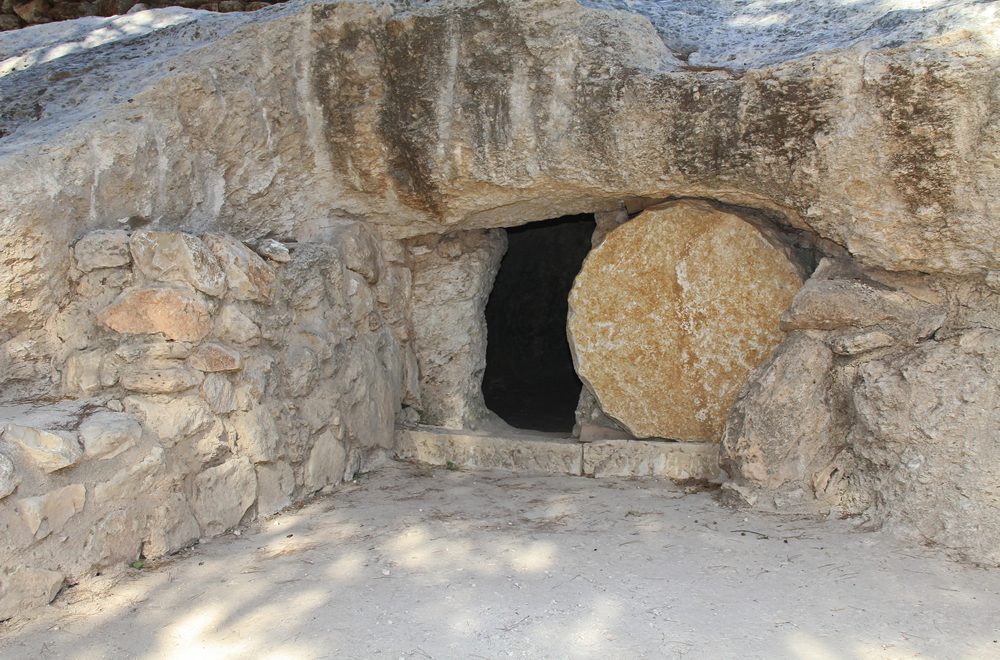
I read a story where a Sunday school teacher had just finished telling her junior group about how Jesus was crucified and placed in a tomb with a great stone sealing the opening. Then, wanting to share the excitement of the resurrection, she asked: “And what do you think were Jesus’ first words when He came bursting out of that tomb alive?” A hand shot up into the air from the rear of the classroom, and that was of a little girl. Leaping out of her chair she shouted out excitedly “I know, I know!” “Good” said the teacher, “Tell us, what were Jesus first words.” And extending her arms high into the air she said: “TA-DA!”

Funny isn’t it? In her little innocence she said something that came to her mind. But when you pause and think about it. It is indeed the ‘TA-DA’ point of our entire Christian faith. The Resurrection is the essential foundation on which the entire Christian faith stands upon!

Now, why do I call it the essential foundation? Apostle Paul, when he wrote his first epistle to the Corinthians, lists six disastrous consequences if Jesus did not rise from the dead. Turn with me to 1 Cor. 15:12-20 (NIV).

12 But if it is preached that Christ has been raised from the dead, how can some of you say that there is no resurrection of the dead? 13 If there is no resurrection of the dead, then not even Christ has been raised. 14 And if Christ has not been raised, our preaching is useless and so is your faith. 15 More than that, we are then found to be false witnesses about God, for we have testified about God that he raised Christ from the dead. But he did not raise him if in fact the dead are not raised. 16 For if the dead are not raised, then Christ has not been raised either. 17 And if Christ has not been raised, your faith is futile; you are still in your sins. 18 Then those also who have fallen asleep in Christ are lost. 19 If only for this life we have hope in Christ, we are of all people most to be pitied. 20 But Christ has indeed been raised from the dead, the first fruits of those who have fallen asleep.

Here are the six disastrous consequences if Christ was not raised.

1) Preaching Christ would be useless (v. 14)

2) Faith in Christ would be useless (v. 14)

3) All the witnesses and preachers of the resurrection would be liars (v. 15)

4) There would be no redemption, and people are still in their sins (v. 17)

5) All former believers who trusted Christ would be perished (v.18)

6) Christians would be the most pitiable people on the earth (v. 19).

Those are some serious consequences, but Paul says not to worry as Jesus did rise from the dead! See the next blog post on how we know that.